Trying Reformer Pilates for the first time can bring a mix of excitement and uncertainty. The machine looks different from anything you’ll find in most gyms, and it’s normal to wonder whether you’ll know what to do once class starts.
The good news is that beginner sessions are designed for people who are completely new to the reformer. You aren’t expected to know the exercises, understand the equipment, or move perfectly on your first day.
This Beginner Reformer Pilates guide explains what the experience is really like, from preparing for class to understanding how your body may feel afterward.
What Is Reformer Pilates?
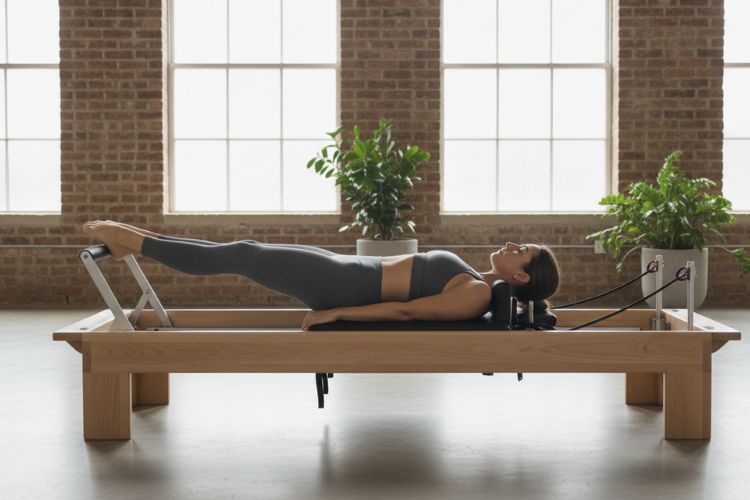
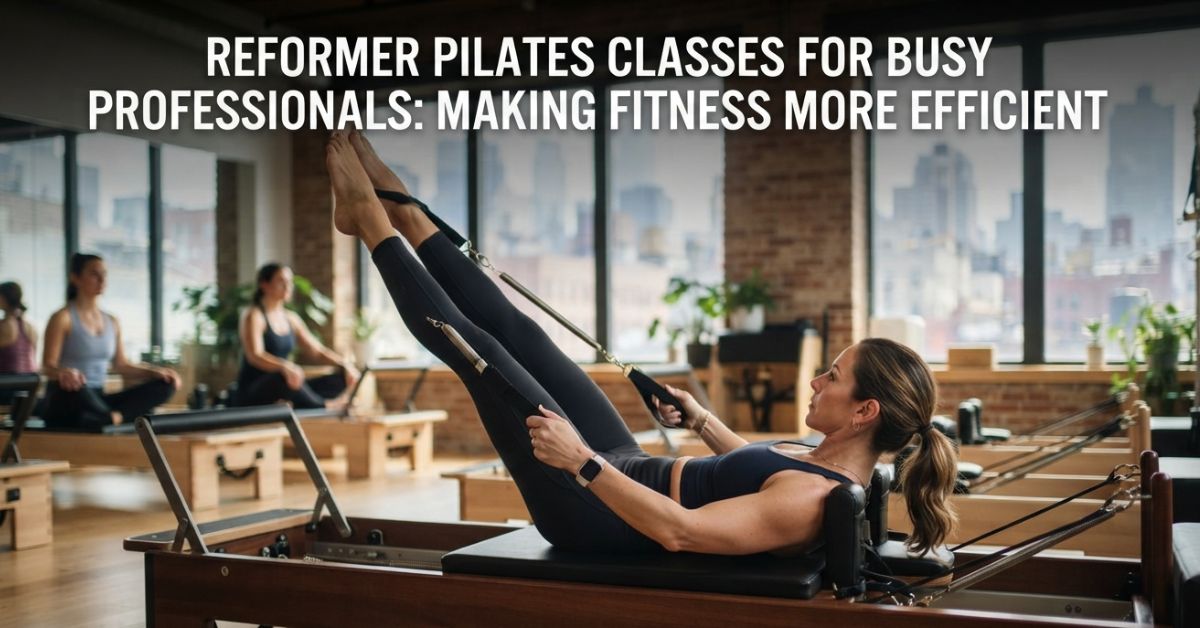
Reformer Pilates is a form of exercise performed on a machine called a reformer. The equipment uses springs, straps, and a sliding carriage to create resistance while supporting controlled movement.
The reformer offers an additional level of difficulty in contrast to mat-based Pilates, where you primarily work against your own body weight. Depending on your expertise and level of fitness, you can change the resistance to make activities feel simpler or more difficult.
One reason Reformer Pilates continues to attract beginners is that it combines strength, stability, mobility, and body awareness in a single workout. The machine may appear intimidating at first, but most people quickly realize it is designed to help movement rather than complicate it.
Before Your First Class: How to Prepare
Wear comfortable clothing that allows you to move freely. Fitted activewear is often recommended because it helps instructors check your posture and alignment during reformer pilates services. Grip socks are commonly required to prevent slipping, and arriving 10 to 15 minutes early gives you time to get familiar with the reformer and meet your instructor. If you have an injury or physical limitation, let the instructor know beforehand so exercises can be modified when needed.
What Happens During a Typical First Class?
Most beginner sessions follow a similar structure, even though every instructor has their own teaching style.
Getting Started on the Reformer
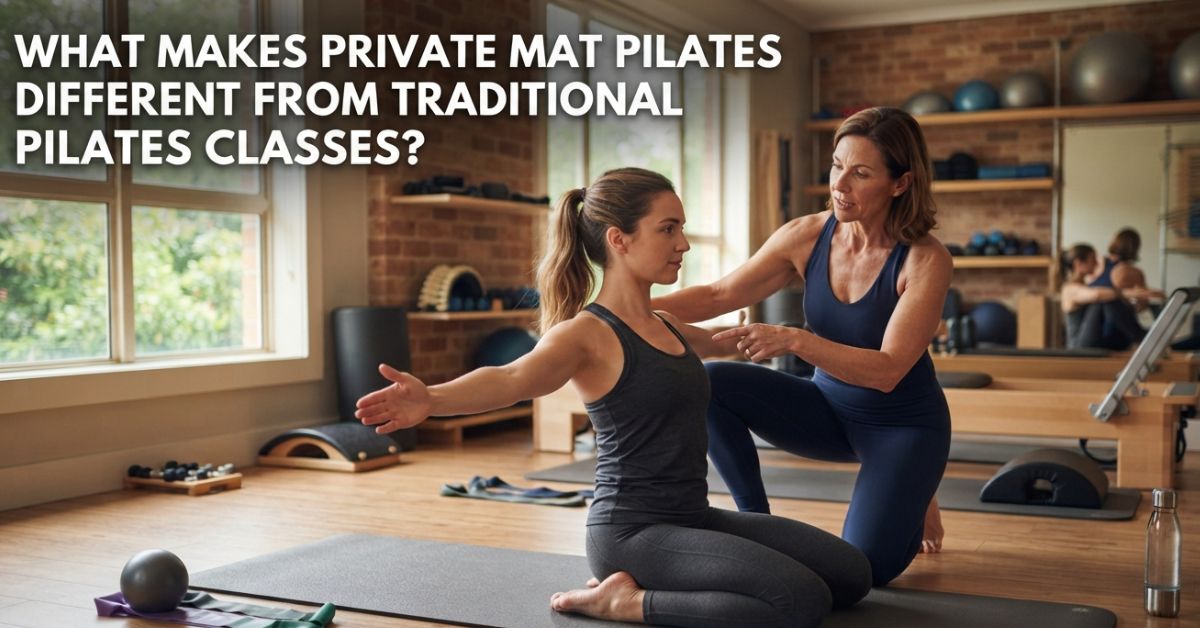
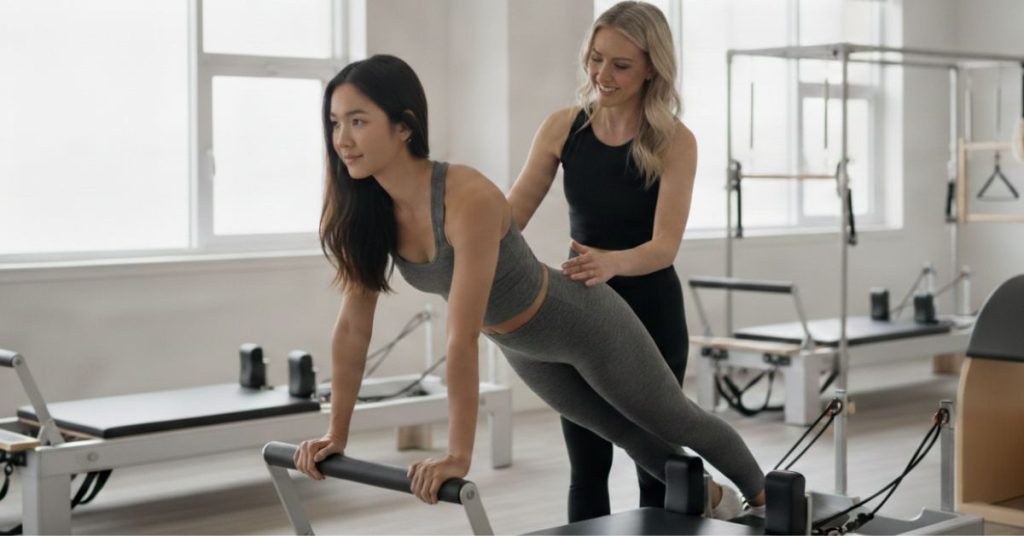
Your instructor will usually begin by introducing the reformer and explaining its main parts. You may learn how the springs work, where to place your hands and feet, and how to move the carriage safely.
Throughout the lesson, you’ll also hear a few Pilates words and breathing cues. You don’t have to remember everything right away. Before the vocabulary begins to seem comfortable, most novices require multiple sessions.
The first few minutes are often focused on helping you become comfortable with the equipment rather than jumping straight into challenging exercises.
The Exercises You’ll Typically Perform
After the introduction, the workout begins with simple movements that help you understand how the machine responds to your body.
A typical Reformer Workout may include leg presses, core exercises, arm movements using straps, and movements that challenge balance and coordination. Rather than rushing through exercises, you’ll be encouraged to focus on control and proper technique.
One thing many people notice right away is how much attention Pilates places on movement quality. Small adjustments in posture or breathing can completely change how an exercise feels. Even though the workout is low impact, you’ll often feel muscles working in ways that are different from traditional gym exercises.
How the Session Ends
Most classes finish with slower movements and stretching. This part of the session gives your muscles time to relax and helps your body transition out of the workout. It’s also an opportunity to ask questions about anything that felt unfamiliar during class.
By the end of the session, most beginners feel much more comfortable with the machine than they did when they first walked into the studio.
Is Reformer Pilates Difficult for Beginners?
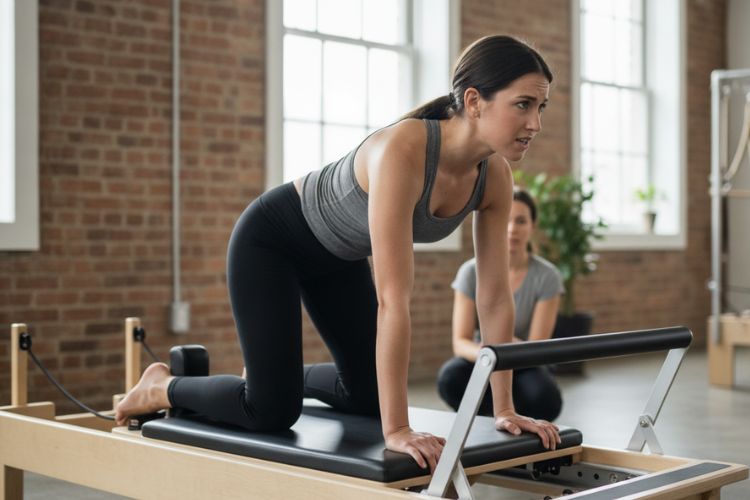
Many beginners are surprised to learn that Reformer Pilates is less about physical strength and more about control. The moving carriage creates a different exercise experience than most people are used to, requiring you to coordinate your movements while maintaining proper form. This can feel unfamiliar at first, even for those who already have an active lifestyle.
The learning curve usually comes from understanding how the machine responds to your body. You may need a moment to figure out where to place your hands or feet, how much resistance feels comfortable, or how to follow movement cues while exercising. These small challenges are a normal part of getting started.
Fortunately, starting classes are set up with this transitional phase in mind. Throughout the lesson, instructors offer direction and frequently make adjustments as needed. Regular practice makes the movements more effortless, and most people start to feel considerably more at ease after a matter of courses.
What Does a Reformer Pilates Workout Feel Like?
Many first-time participants are surprised by how challenging controlled movement can be.
Why It Feels Different From Traditional Workouts
A Reformer Workout doesn’t rely on heavy weights or fast-paced cardio. Instead, it focuses on maintaining control throughout each movement. Because the carriage moves beneath you, your body must constantly work to stay stable. This engages muscles that often receive less attention during traditional workouts.
The result is a workout that feels both strengthening and focused. You may finish class feeling challenged without feeling completely exhausted.
A quality Pilates Class Guide often explains that Pilates creates a different type of fatigue. Instead of feeling drained, many people leave class feeling stronger, taller, and more aware of how they move.
What to Expect After Class
It’s quite usual to experience some minor soreness the following day, particularly in the shoulders, hips, glutes, and core. This occurs as a result of your body adjusting to new movement patterns and using muscles that might not be used much in daily activities. As your body adjusts to the workouts, that pain usually goes away as you continue to attend courses.
Common Mistakes First-Time Participants Make
- Overspeeding is a common mistake. Pilates has a strong emphasis on control, and rushing through exercises often makes it harder to perform movements efficiently.
- Additionally, focusing more on the machine than the technique can impede advancement. Understanding the equipment is useful, but the most important thing is to maintain appropriate form.
- Some beginners unintentionally hold their breath during challenging movements. Breathing is an important part of Pilates and becomes more natural with practice.
- Comparing yourself to experienced participants can be discouraging. Everyone starts somewhere, and improvement comes with consistent practice rather than perfection.
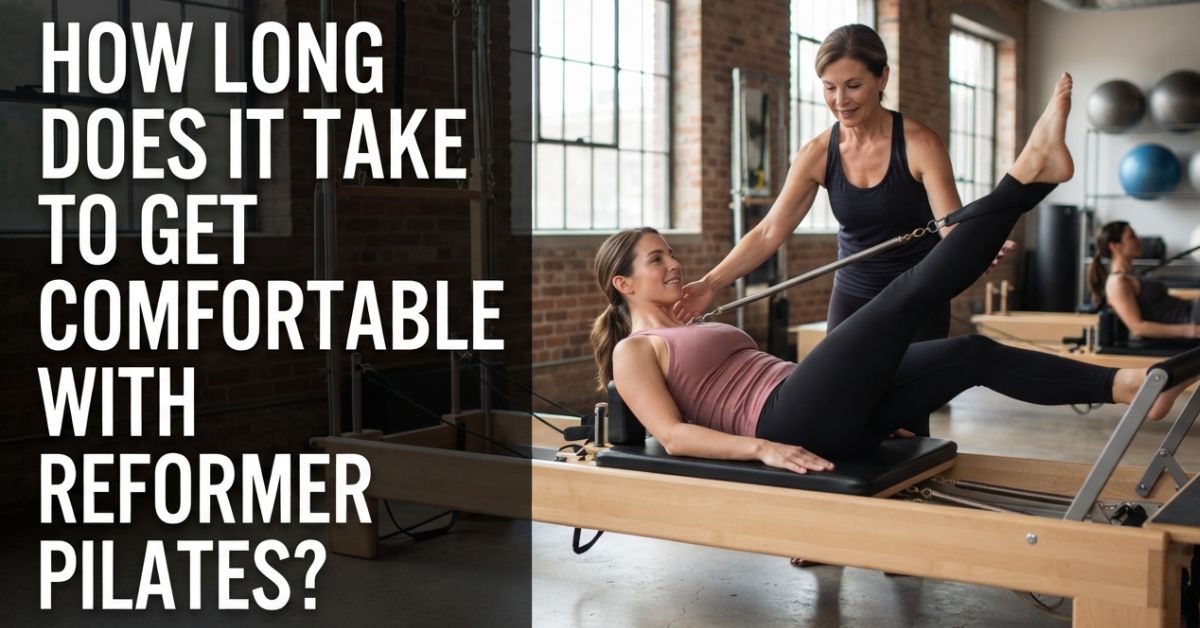
How Many Classes Does It Take to Feel Comfortable?
Most people begin feeling comfortable after three to five classes. While the first session can feel unfamiliar, the learning curve is usually shorter than many beginners expect.
As you attend more classes, the machine starts to feel less intimidating, and common exercises become easier to follow. You’ll spend less time thinking about instructions and more time focusing on movement quality and control.
Many students who start with reformer pilates classes for beginners notice improvements in coordination and body awareness within the first few weeks. A helpful Pilates Class Guide can explain what to expect, but regular practice is what builds confidence and familiarity over time.
Conclusion
Walking into your first class without knowing exactly what to expect is completely normal. The unfamiliar machine, new terminology, and different movement style can seem intimidating at first.
Once the session begins, however, most beginners realize that Reformer Pilates is designed to be learned gradually. Each class builds on the previous one, helping you become more comfortable with the equipment and more confident in your movements.
Beginner-friendly studios like Pilates Plus may help make your first few sessions feel less daunting while providing you with the direction you need to lay a solid foundation if you’re searching for a helpful place to start.
FAQs
Do I need to be fit before trying Reformer Pilates?
No. Reformer Pilates can be adapted for a wide range of fitness levels, including complete beginners.
Can beginners join mixed-level Reformer Pilates classes?
Yes. Many studios welcome beginners in mixed-level classes, though beginner-focused sessions may provide additional guidance.
Should I eat before a Reformer Pilates class?
A light snack or meal one to two hours before class is usually more comfortable than exercising on a full stomach.
How often should newbies practice Reformer Pilates?
A typical beginning point for developing consistency and confidence is two to three lessons a week.
Is Reformer Pilates appropriate for senior citizens?
Most of the time, sure. Many older persons can benefit from Pilates due to its low-impact nature, but specific health conditions should always be taken into account.