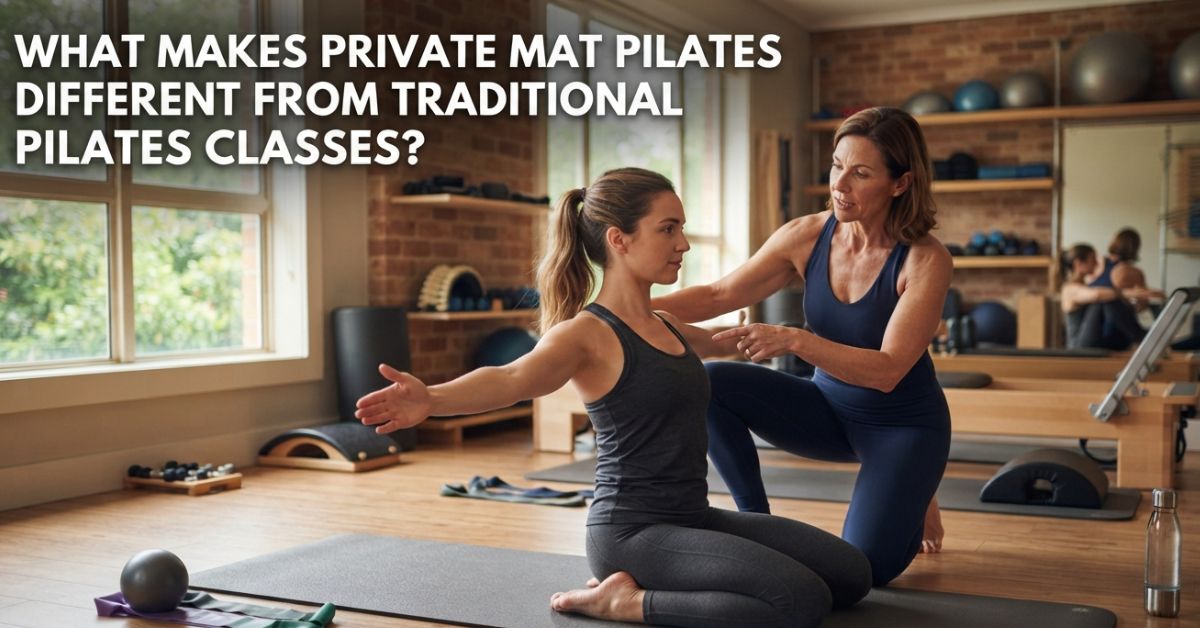
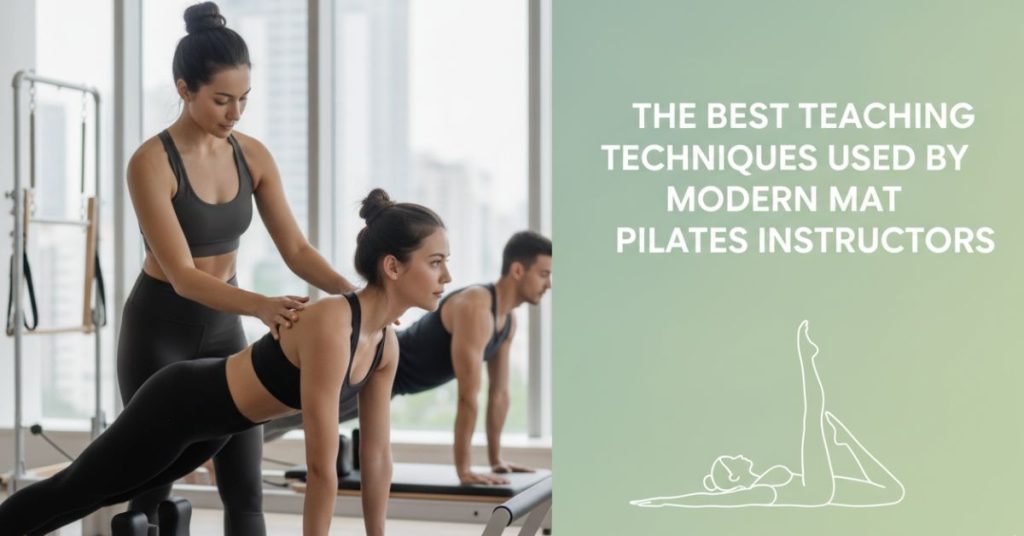
Some instructors can teach the exact same exercise and get completely different results from their students. The difference usually isn’t the exercise. It’s the way it’s taught.
Strong mat pilates instructors know how to explain movements clearly, spot mistakes early, and help students build confidence over time. Their approach goes beyond demonstrating exercises. It helps people understand how to move better, which is one of the reasons effective teaching plays such an important role in the Pilates experience.
What Do Great Mat Pilates Instructors Do Differently?
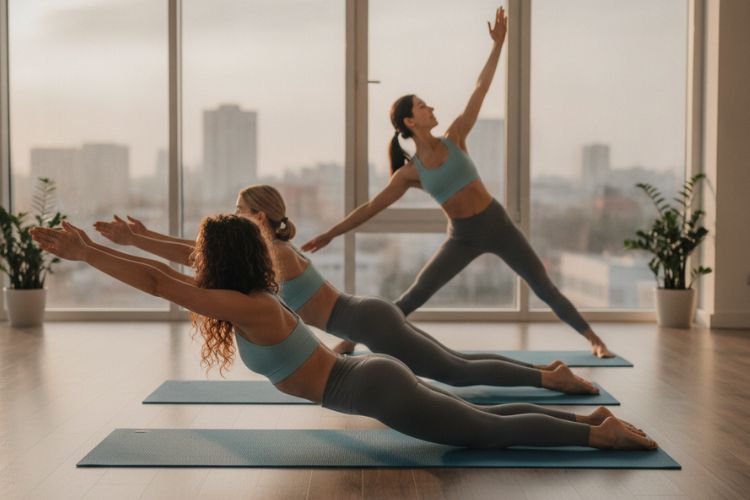
Strong instructors focus on helping students understand movement rather than simply copying it. Instead of rushing through exercises, they explain how movements should feel, what muscles should be working, and how to make adjustments when needed.
Many experienced mat pilates instructors also recognize that every student learns differently. Some learn through demonstration, whereas others require instruction either verbally or practically. It becomes important for a teacher to know when and how to use all these techniques successfully.
How Does Effective Mat Pilates Teaching Look in Practice?
Good instruction often comes down to small details. The following pilates teaching techniques are commonly used to help students learn more effectively and feel more confident in class.
Clear Movement Cues That Keep Students Focused
One of the most valuable skills an instructor can develop is the ability to communicate clearly. Students should not have to guess what a movement looks or feels like. Good cues simplify exercises and make them easier to follow.
Rather than employing complicated terminologies, a seasoned pilates instructor is likely to teach their movements by breaking them down into simpler components. It ensures that the learners remain concentrated while avoiding confusion. Instructors usually start out by working on improving communication skills since simple tasks can easily become complex.
Demonstrations That Bring Exercises to Life
Not everyone learns the same way. Some students understand an exercise immediately after hearing an explanation, while others need to see it performed first.
Demonstrations aid in closing that gap. Instructors can help students learn placement, alignment, and transitions by demonstrating the movement before they are asked to perform it. This is one reason many certified mat pilates instructors combine verbal explanations with demonstrations throughout class.
Modifications That Meet Students Where They Are
Walk into almost any Pilates class, and you’ll find people with different experience levels, mobility limitations, and fitness backgrounds. A single approach rarely works for everyone.
Good teachers will provide adaptations that enable their students to engage in activities safely without feeling overly challenged. An injured individual requires different adaptations than a person who is well-versed in a particular activity. The ability to do this is crucial for mat pilates and ensures that sessions are welcoming.
Real-Time Feedback During Class
Teaching does not stop once an exercise begins. Good instructors continue observing students throughout the session and provide guidance when necessary.
Small adjustments can often improve movement quality immediately. A reminder about posture, breathing, or alignment can help students perform an exercise more effectively. Many practical pilates instructor tips focus on observation because students may not always recognize when their form begins to change during a workout.
This kind of feedback also improves overall pilates workout instruction. Instead of waiting until class ends, instructors can help students make corrections while the movement is still happening.
Building Body Awareness Through Movement
One goal of Pilates is to help people become more aware of how their bodies move. Strong instruction supports this process by encouraging students to pay attention to alignment, control, and muscle engagement.
Instead of just concentrating on the number of repetitions, experienced mat pilates teachers will have their students pay attention to how the exercise feels. Are the correct muscles being used? Is the body balanced? This will allow them to develop skills that they can take into other exercises and activities.
Over time, this awareness can lead to greater confidence and better movement habits. Students begin understanding not just what to do but why they’re doing it.
Creating a Comfortable Learning Environment
Learning becomes much easier when people feel comfortable asking questions. Unfortunately, some beginners hesitate because they worry about making mistakes or slowing down the class.
The best instructors create an atmosphere where questions are welcome, and mistakes are viewed as part of the learning process. Students are more likely to stay engaged when they feel supported rather than judged.
A good environment will also improve the pilates exercise class as well, since communication happens on two-way terms. It enables instructors to learn what their students need, and vice versa.
Why Good Teaching Matters More Than Many People Realize?
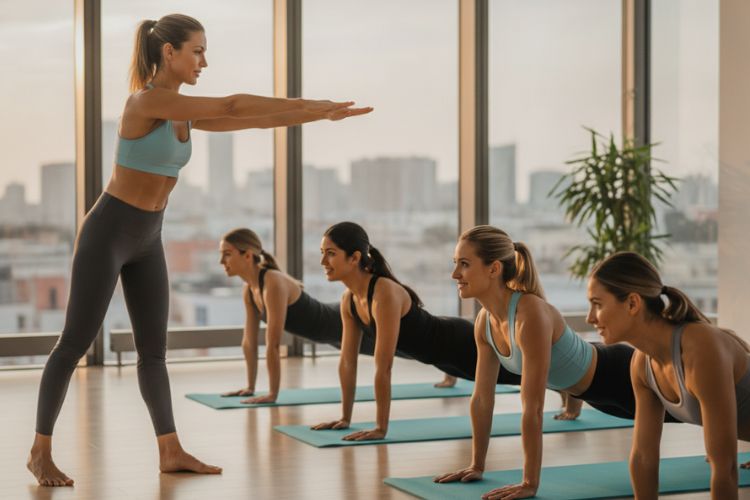
Many people assume progress comes primarily from the exercises themselves. While exercise selection matters, instruction plays a major role in determining how effectively those exercises are performed.
Good teaching helps students understand movement patterns, improve technique, and build confidence. It also reduces the likelihood of developing poor habits that may limit progress later on.
Another benefit is consistency. When students feel comfortable and understand what they’re doing, they’re often more likely to continue attending classes. This is one reason quality mat pilates training places such a strong emphasis on teaching skills in addition to exercise knowledge.
What to Look for in a Mat Pilates Instructor?
If you’re searching for a class, pay attention to how the instructor communicates. Do the explanations make sense? Are different ability levels being accommodated? Does the instructor actively observe students throughout the session?
A good mat pilates instructor normally gives clear instructions, makes proper modifications, and fosters a conducive learning atmosphere. Their priority is the development of their students, not just following the set course.
It’s also worth considering the instructor’s qualifications and experience. Many students prefer learning from certified pilates instructors because certification programs often include education in anatomy, movement principles, and teaching methodology.
Conclusion
The most effective Pilates classes are about more than completing a series of exercises. They help students understand movement, develop confidence, and build skills that continue improving over time.
To improve the learning process, great mat pilates instructors integrate observation, encouragement, communication, and flexibility. Exercises are important, but what really helps students get the most out of any lesson is frequently the quality of the teacher.
FAQs
What is the general approach used by instructors for newbies?
Newbies are usually taught some basic movements initially. Usually, the instructors employ clear descriptions and demonstrations to facilitate understanding.
Why is it important to use verbal cues in a Pilates class?
Verbal cues help students know how to move properly in an exercise and what sensation they should feel. Good cues could be beneficial.
Are modifications available in most classes?
All instructors have their own teaching styles, but many instructors give modifications for exercises.
How can I tell if a Pilates instructor is experienced?
Experienced instructors usually communicate clearly, observe students closely, offer appropriate adjustments, and adapt exercises when necessary. They also tend to create a comfortable learning environment.
What should I expect during my first class of Mat Pilates?
You will learn movement, breathing, and alignment fundamentals. The emphasis is always placed on learning the right way to perform movements, not necessarily doing them quickly.