A long workday can leave more than your mind feeling tired. Hours at a desk, time spent driving, or standing for much of the day can leave your shoulders, back, hips, and legs feeling tense. And even after work is finished, your thoughts may still be stuck on deadlines or tomorrow’s plans.
Wellness yoga offers a gentle way to slow things down. Simple poses and steady breathing can support physical relaxation while giving your mind a quieter break from the day. You do not need a long or difficult session. A few comfortable movements can be enough to make yoga part of your evening mind-body wellness routine.
Why Does Your Body Still Feel Tense After the Day Ends?

Sitting at a desk for hours can leave the hips and back feeling stiff. Driving adds more sitting, while jobs that involve standing may leave the legs and feet tired.
Mental tension can continue as well. You may be home while your thoughts are still focused on work. An evening Wellness Yoga practice uses slower movement and comfortable positions rather than making the body work through another demanding session.
How Wellness Yoga Helps You Wind Down
Gentle movement gives areas that have stayed in similar positions all day a chance to move. Slower breathing also encourages you to pay attention to the body rather than rushing from one task to another.
This brings physical relaxation and mental relaxation into the same practice. For people interested in yoga for mental health, a quiet evening routine can provide a few minutes away from work and other distractions.
7 Yoga Poses to Relax After a Long Day
You do not need advanced flexibility for these poses. Move slowly, breathe normally, and stay within a range that feels comfortable.
1. Cat-Cow Pose
Start on your hands and knees with your hands below your shoulders. Breathe in as you gently lift your chest and curve your back, then round your spine as you breathe out. This slow movement helps get the spine moving after sitting and works well in a wellness yoga routine.
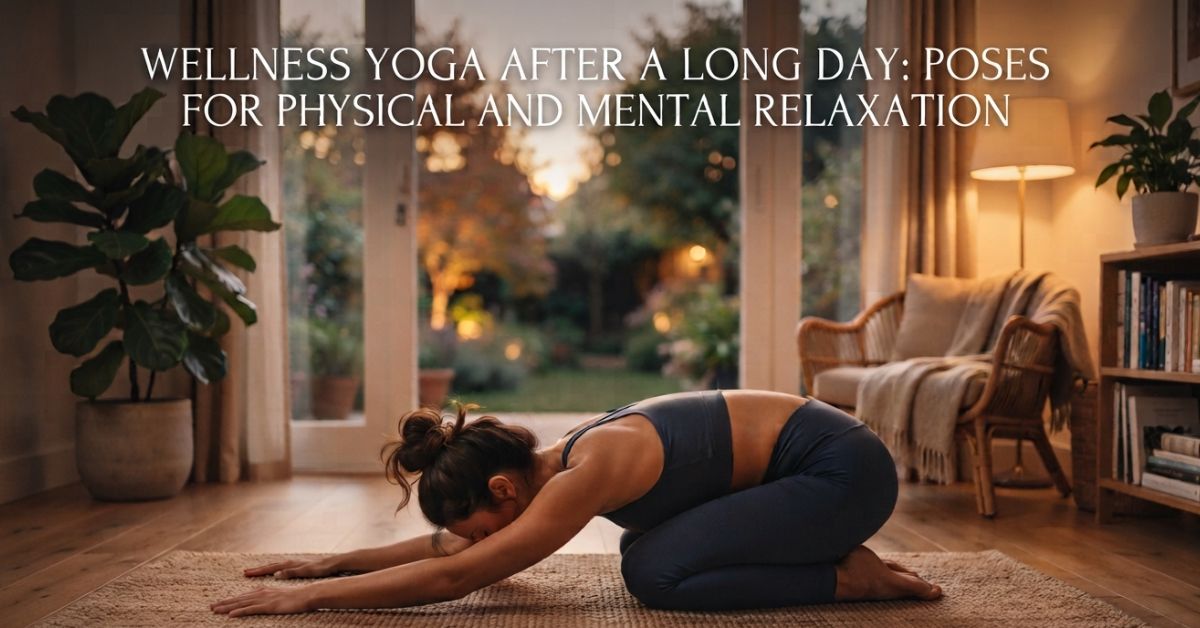
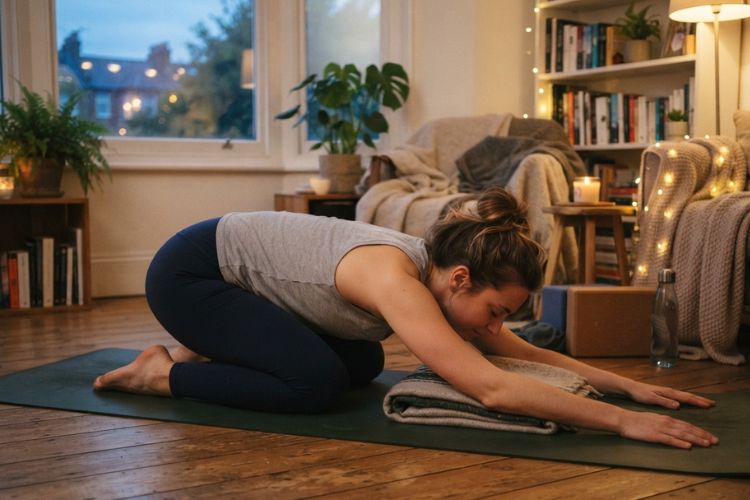
2. Child’s Pose
Child’s Pose gives you a quiet moment after a tiring day. Bring your hips toward your heels, stretch your arms out in front, and rest your forehead on the mat. If reaching the floor feels awkward, place a cushion underneath for support. This common restorative yoga pose can help release some of the stiffness around your back, hips, and shoulders.
3. Seated Forward Fold
Long hours at a desk can leave the backs of your legs feeling tight. Sit with your legs extended and ease your upper body forward without worrying about reaching your toes. Bending your knees is fine too. The goal is physical relaxation, so stay within a range that feels right for your body.
4. Supine Spinal Twist
Your back and hips may need some movement after staying in one position for much of the day. From your back, draw both knees toward your chest and guide them over to one side. Take a few breaths before changing sides. It is an easy movement to include in yoga for daily stress after work.
5. Reclining Bound Angle Pose
When you are ready to become more still, bring the soles of your feet together and let your knees open out to the sides while resting on your back. If there is too much tension around your hips, support each knee with a cushion. Stay in the position for a few breaths and let your lower body settle.
6. Legs-Up-the-Wall Pose
After being on your feet or sitting at a desk all day, this pose gives you a chance to be still. Settle down beside a wall and place your legs up against it. Find a position that feels easy to hold and let your arms rest by your sides. It is a simple wellness yoga pose to use as your evening routine starts winding down.
7. Savasana
Savasana is usually saved for the final few minutes of a yoga session. Stretch out on your back, let your arms fall naturally beside you, and allow your whole body to become still. Close your eyes if you prefer and simply notice your breathing. These last few minutes give you space for mental relaxation before getting up.
Turning These Poses Into a Simple Evening Routine
You do not have to work through every pose each evening. Some days, your back may need more attention. On others, you might just want a few quiet minutes to stretch and switch off after work. Pick the movements that make sense for how you feel that day.
There is no need to rush from one pose to the next either. Give yourself time to settle into each movement and breathe normally. If Yoga for Mental Health is part of your routine, putting your phone aside for a while can also help keep work emails and notifications out of those few minutes.
And if following a routine on your own feels difficult, joining a wellness yoga studio gives you a set time to show up and practice with an instructor. You can simply follow the class instead of deciding what to do each evening.
Making Evening Yoga Easier to Stick With
Keep the routine simple enough that you can actually maintain it. Leave your mat somewhere accessible and choose a time that normally works with your evening.
A short practice can still have a useful place in Mind Body Wellness. You can also use pillows, blankets, or blocks to make poses more comfortable. Yoga for Daily Stress does not need to become another item you feel pressured to complete every night.
Conclusion
If your body feels tense and your mind stays busy after a long day, Wellness Yoga can provide a simple way to slow the pace. Gentle movement, comfortable poses, and steady breathing can support both physical and mental relaxation without requiring a long workout.
For those who prefer some guidance, Pilates Plus Columbus offers yoga classes led by instructors. Having a class in your weekly schedule can make it easier to set aside time for movement and build a routine you can stick with.
FAQs
Which yoga poses are good after a long day?
Gentle poses such as Cat-Cow, Child’s Pose, Supine Spinal Twist, Legs-Up-the-Wall, and Savasana can work well when you want slower movement after work.
How long should an evening yoga session be?
There is no required length. Even a short routine can be useful if it fits comfortably into your evening and allows enough time to move without rushing.
Is it okay to do yoga before bed?
Gentle yoga can be practiced before bed if it feels comfortable for you. Slower poses are generally more suitable at this time than an intense workout.
Can beginners practice relaxing yoga poses?
Yes. Beginners can start with simple movements and use cushions, blankets, or blocks when extra support is helpful.
Should evening yoga be different from morning yoga?
It can be. Morning yoga may focus more on getting the body moving, while an evening practice can use slower movements and quieter poses to help you wind down.