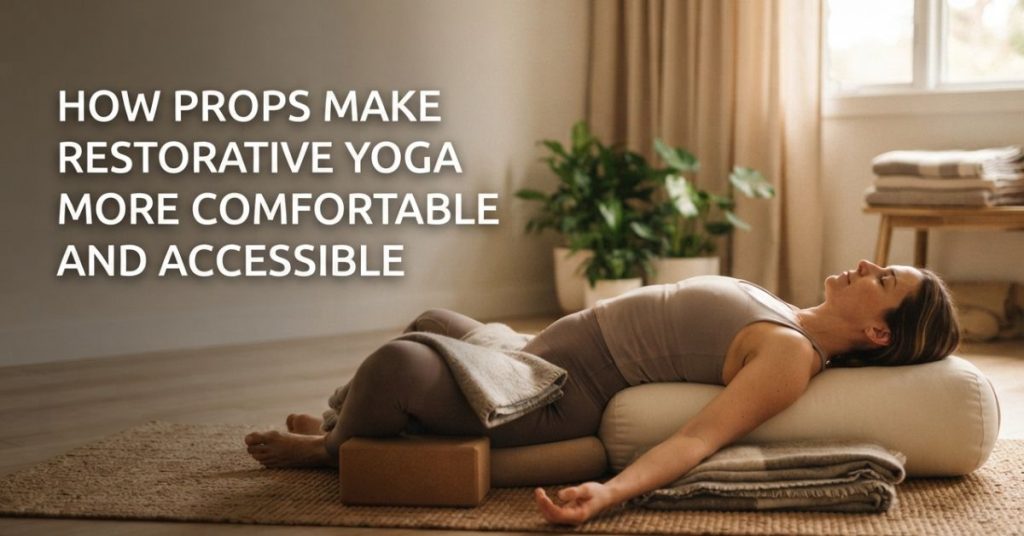
Resting in a yoga pose sounds easy until your knees start aching or your back feels stiff. You might spend more time changing positions than actually relaxing. Restorative Yoga Props can help by giving your body somewhere comfortable to rest. That way, you can stay in a pose without constantly moving around.
At Pilates Plus Columbus, we believe yoga should feel good, whether you’re a beginner or have been practicing for years. Bolsters, blankets, blocks, and cushions can make certain poses easier to hold. You can move them around to find what works for your body. There’s no need to stretch further than you’re comfortable with.
Why Does Restorative Yoga Use So Much Support?
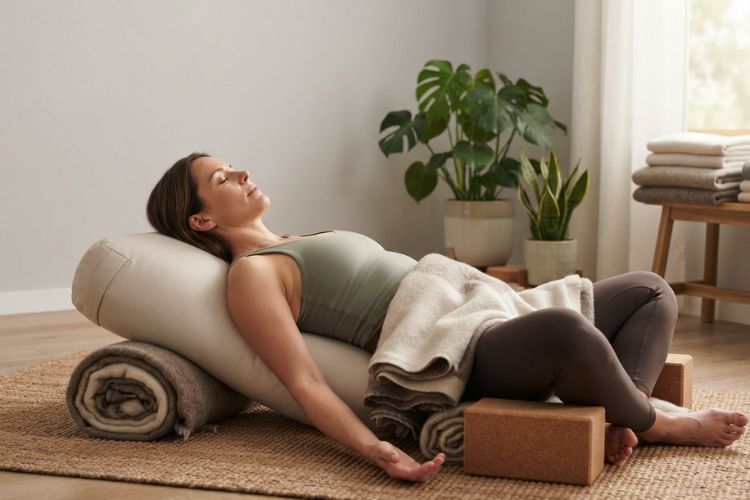
Unlike active yoga styles that involve flowing between poses, restorative yoga focuses on slowing down and spending more time in comfortable positions. You may stay in one pose for several minutes, allowing your body to rest while breathing naturally. However, holding a position for that long can become uncomfortable without proper support.
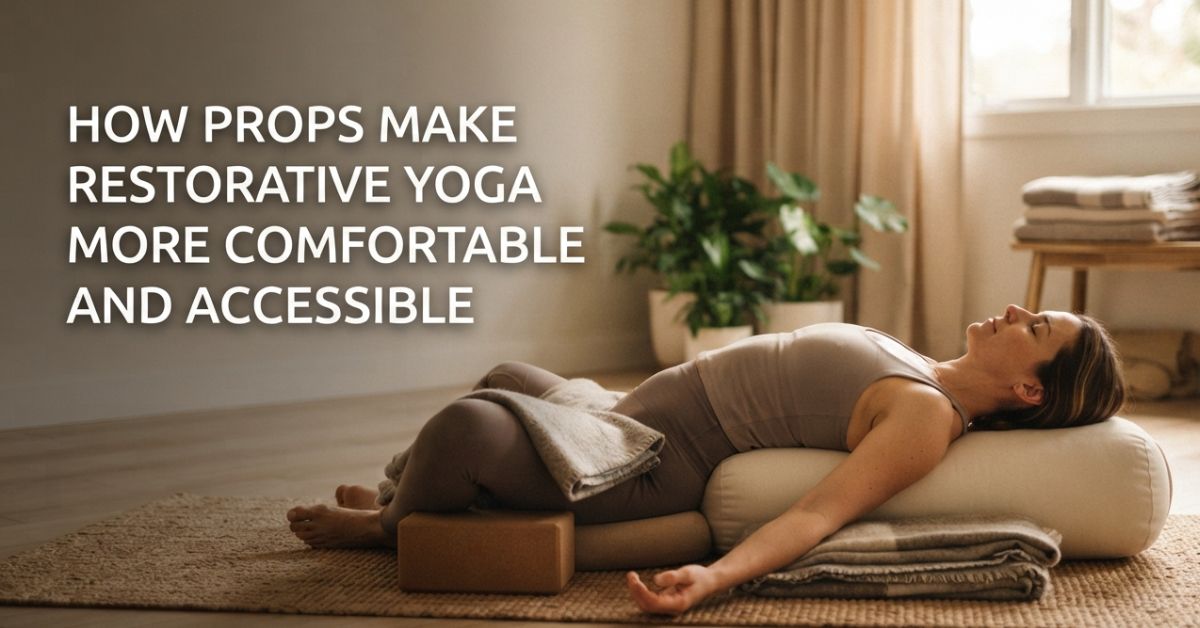
That’s why Restorative Yoga Props play such an important role. Rather than using muscle strength to maintain a position, you can rest against a bolster, folded blanket, or block. The support helps reduce unnecessary effort, giving you more room to focus on your breathing and how your body feels.
A Closer Look at the Props Used in Restorative Yoga
Different props serve different purposes, and you don’t need every piece of yoga equipment to enjoy a comfortable session. Some provide height, while others cushion sensitive areas or help you maintain a position without straining. Here’s how commonly used props can change your experience.
Bolsters for Supporting the Back, Hips, and Legs
A yoga bolster is a firm, supportive cushion that can be placed beneath your back, knees, or upper body. For example, resting your chest against a bolster during a forward-folding position can make it easier to relax without holding yourself up. It also helps you avoid bending further than feels comfortable.
Yoga Blocks for Extra Height and Stability
If you find it hard to reach the floor during yoga, a block can give your hands somewhere to rest. You can use it at different heights depending on how far you want to bend. Blocks can also go under a bolster when you need to raise it a little.
Blankets and Yoga Cushions for Gentle Support
Your knees or ankles might start to ache when you’ve been sitting on the floor for a while. A folded blanket can make the surface softer, while Yoga Cushions give you somewhere to sit or rest your legs. You can add another fold or move the cushion around if something doesn’t feel quite right.
How Props Take the Strain Out of Holding Yoga Poses
A position that feels fine for thirty seconds may become uncomfortable after several minutes. Your lower back might begin to ache, or your shoulders may tense as you try to stay still. Restorative Yoga Props help address these small discomforts by supporting areas that would otherwise work harder to maintain the pose.
Good Yoga Support also allows you to adjust the position to your body rather than trying to match a particular shape. A bolster beneath your knees, for example, may ease tension in your lower back while lying down. These adjustments make it easier to stay comfortable without constantly shifting around.
Another advantage is having more freedom to focus on gentle Relaxation Techniques, including slow breathing and noticing where you hold tension. This is also an important part of Restorative Yoga for Relaxation, where supported poses and mindful breathing can help you unwind without putting extra pressure on your body.
Making Restorative Yoga Work for Different Bodies
Flexibility, mobility, and physical comfort vary from person to person. Some people find sitting on the floor easy, while others experience stiffness in their hips or discomfort around their knees. Restorative yoga can accommodate these differences through thoughtful modifications rather than expecting everyone to practice in exactly the same way.
This approach also makes Mindful Movement more approachable. Instead of worrying about how deeply you can stretch, you can pay attention to your comfort, breathing, and individual range of motion. If a pose causes pain, numbness, or unusual pressure, changing or leaving the position is always the better choice.
Four Restorative Yoga Poses You Can Try With Props
A few simple props can change how a yoga pose feels, especially when you’re staying in one position for several minutes. Here are four restorative poses where a little extra support can help you get comfortable and relax.
Supported Child’s Pose With a Bolster
Get onto your knees and place a bolster in front of you. Lean forward and rest your chest on it, with your knees slightly apart and your arms wherever they feel comfortable. If your ankles feel sore against the mat, try putting a folded blanket underneath them. Avoid this pose if kneeling causes pain.
Reclined Butterfly With Support Under the Knees
Lie on your back with the soles of your feet touching and your knees opening out to the sides. Put a folded blanket or yoga block under each thigh to stop your legs from dropping too far. You can move the props around until you find a position that doesn’t pull at your hips or knees.
Supported Spinal Twist With a Blanket or Block
Start by lying on your back with your knees bent. Bring both knees over to one side and put a folded blanket underneath them. You don’t have to twist very far to feel a gentle stretch through your back. Stay there for a few breaths, then bring your knees back up and try the other side.
Savasana With a Bolster Under the Knees
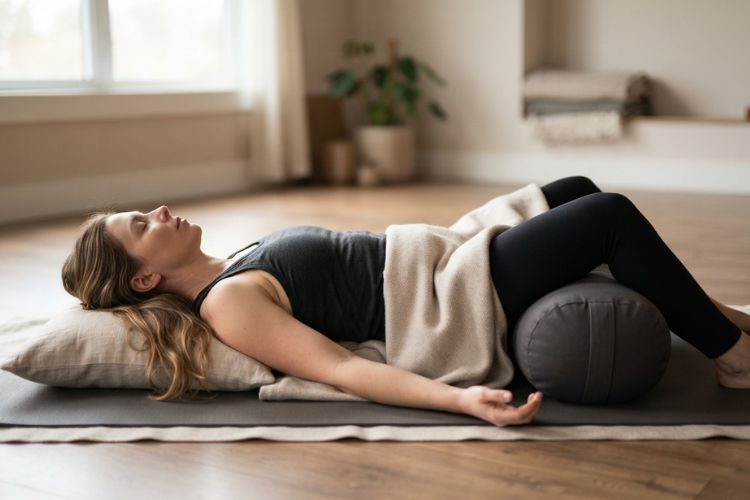
Stretch out on your back and place a bolster under your knees. Keep your arms by your sides or wherever they feel most natural. If your head feels too low, fold a thin blanket and place it underneath. Having your knees slightly raised may help your lower back feel less strained while you’re lying down.
Finding Comfort in a Guided Restorative Yoga Class
Trying restorative yoga at home is a good place to start, but you might not always know which props to use or where to put them. Having an instructor nearby can make things easier. They can show you how to adjust a pose, use a bolster or blanket, and find a position that feels right for you.
Joining restorative yoga classes can give you some time away from your busy routine to slow down and stretch. You can also explore Yoga & Flow sessions, which include a mix of active yoga poses and slower movements. Both offer different ways to spend some time on the mat.
Conclusion
Restorative yoga feels much better when you’re not constantly moving around trying to get comfortable. Something as simple as putting a blanket under your knees or a bolster behind your back can help you settle into a pose and enjoy a few quiet minutes.
With Restorative Yoga Props, you can adjust each pose to what feels right for your body. You don’t have to be particularly flexible or get every position exactly right. What matters is feeling comfortable enough to relax and enjoy your time on the mat.
FAQs
Do beginners need props for restorative yoga?
Not necessarily, but having a few props can make your first few sessions much more comfortable. A bolster, blanket, or yoga block can come in handy when sitting on the floor feels awkward or a pose is difficult to hold.
How long should you hold a restorative yoga pose?
Most restorative poses are held for around 5 to 15 minutes, but you don’t have to stay that long. If you’re just starting out, try a minute or two and see how you feel. Change positions whenever something starts to hurt or feel uncomfortable.
Can you do restorative yoga if you’re not flexible?
Yes, you don’t have to be flexible to try restorative yoga. You can use blankets, blocks, or bolsters to make a pose easier on your body. There’s no need to stretch further than feels comfortable or copy exactly what someone else is doing.
What can I use if I don’t have a yoga bolster?
You can try a firm pillow, a rolled-up blanket, or a couple of folded towels. Just make sure whatever you’re using stays in place and doesn’t flatten too much when you lean against it.