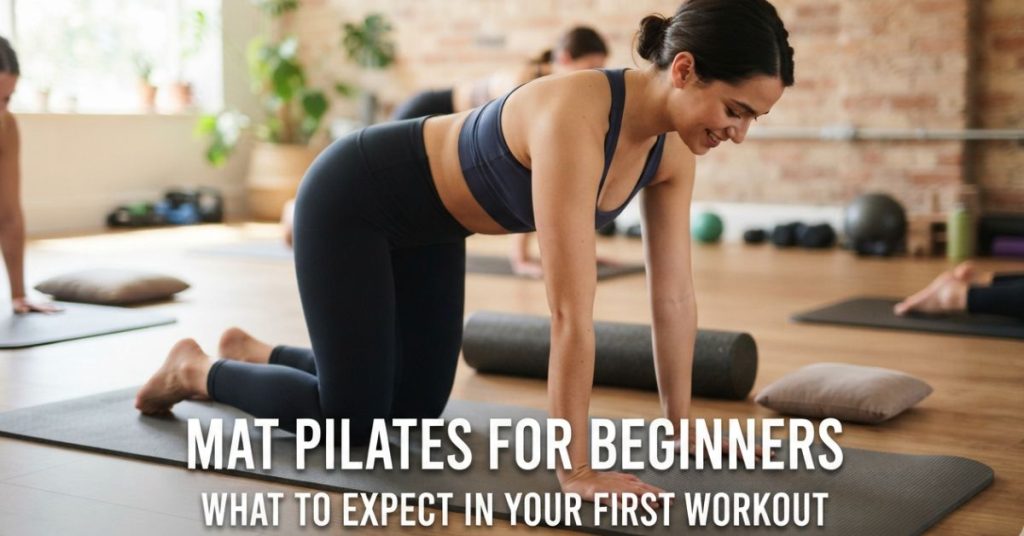
Starting a new workout can feel a little unfamiliar, especially if Pilates is completely new to you. Your first class is often more approachable than you might expect. You do not need advanced flexibility or prior experience. Instead, you will be introduced to basic positions, breathing techniques, and simple exercises at a steady pace, giving you time to get comfortable with the way Pilates works.
What Is Mat Pilates?
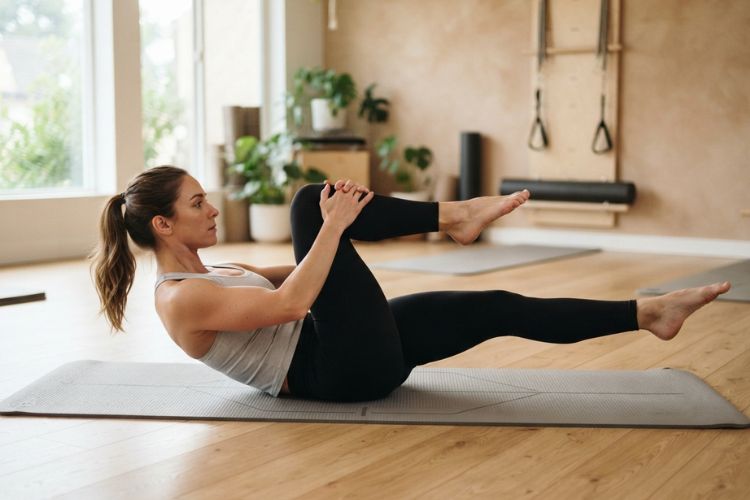
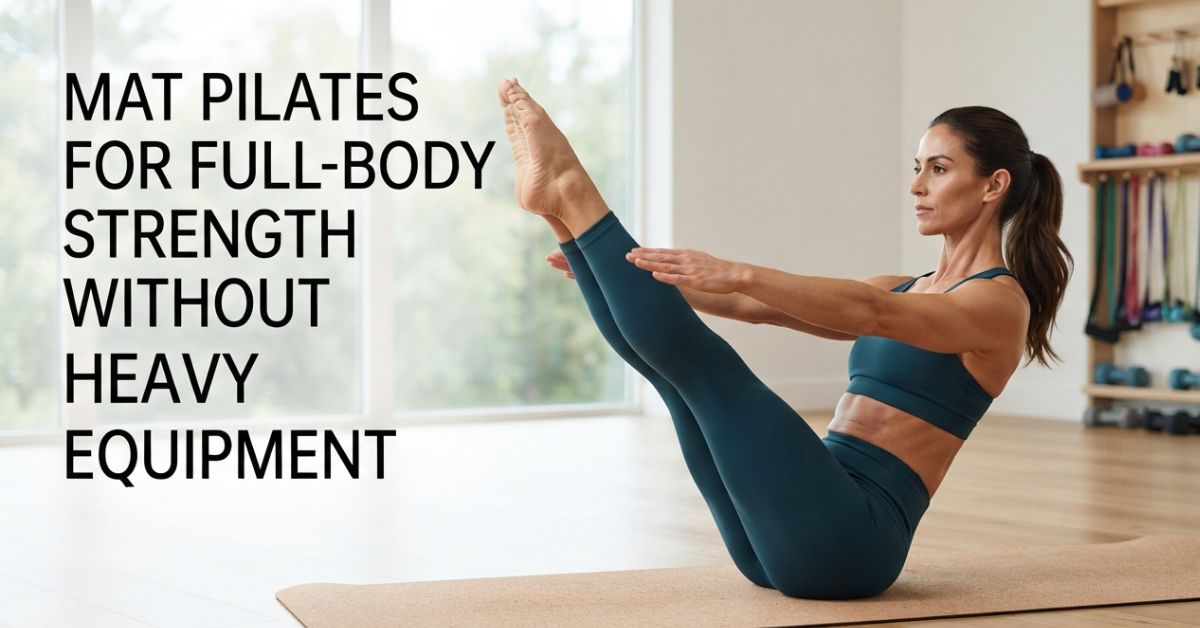
Mat Pilates is a low-impact workout performed primarily on a mat, with your body weight providing most of the resistance. Rather than relying on fast or forceful actions, it places emphasis on core strength, posture, balance, flexibility, and mindful technique. Some classes may also bring in simple props, including resistance bands, small balls, or Pilates rings.
The Pilates Basics are introduced in a gradual way, so you can become familiar with alignment, breathing, and proper positioning. As your skills develop, Pilates Training can support better coordination, stability, and body awareness without the need for complicated machines or equipment.
Can You Start Mat Pilates With No Experience?
No previous Pilates background is required for a beginner-friendly class. Pilates exercises for beginners usually start with simple positions and techniques, making it easier to understand the pilates basics before moving into more demanding sequences. If you are new to mat Pilates for beginners, the exercises can be adjusted to suit your current ability and comfort level.
Your fitness level does not have to be advanced, either. Pilates Fitness places greater importance on technique and precision than on completing a high number of repetitions. If an exercise feels difficult, the instructor can demonstrate a simpler version or adjust the position so you can work within your current ability.
Getting Ready for Your First Mat Pilates Class
Wear comfortable clothing that allows you to bend, stretch, and change positions easily. Depending on the studio, you may exercise barefoot or wear grip socks. It is also useful to bring water and check beforehand whether the studio provides mats or expects you to bring your own.
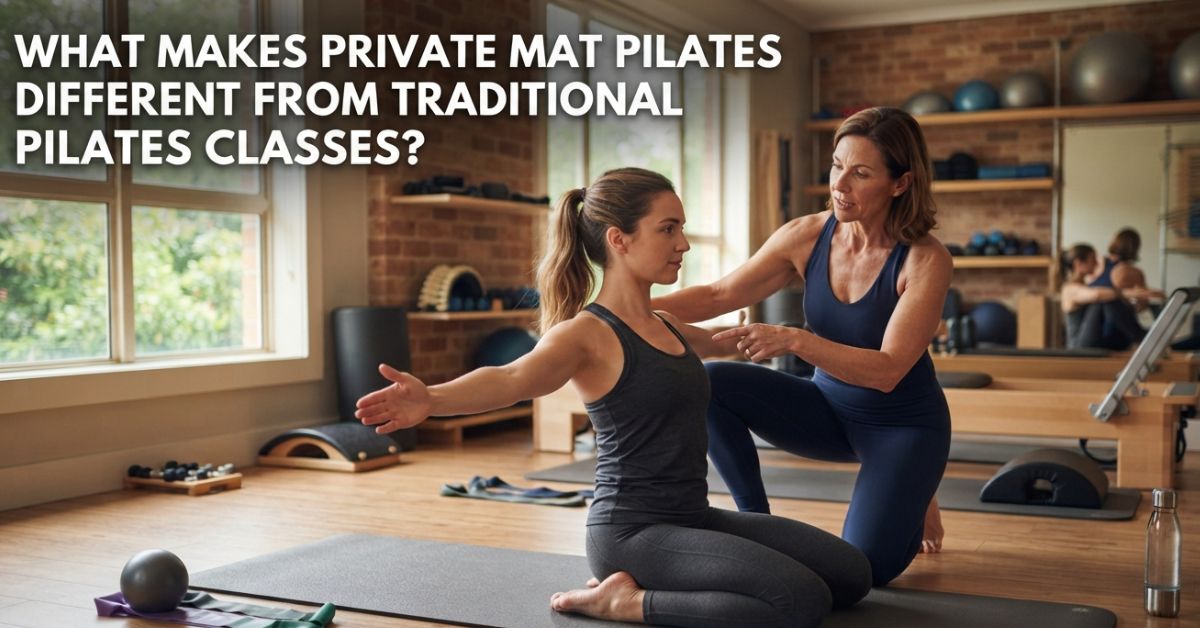
Try to arrive a few minutes early so you can settle in and become familiar with the space. Since this is your first Pilates class, tell the instructor that you are new and mention any physical limitations they should know about. This gives them a better idea of how to guide you throughout the session.
How a Beginner Mat Pilates Workout Usually Starts?
A Beginner Pilates Workout often opens with gentle exercises that prepare your body for the rest of the session. You may begin lying down or seated while the instructor explains breathing, alignment, and basic positioning. These early exercises help you understand how different parts of your body work together.
The warm-up might include pelvic tilts, gentle spinal movements, leg work, or simple arm exercises. Instead of jumping straight into demanding sequences, the instructor builds the session gradually, allowing you to learn each pattern before adding more complexity.
The Exercises You May Try During Your First Workout
Your first session may include several basic exercises, with the exact selection depending on the instructor and class structure. Among the Pilates exercises for beginners, you may work your abdominal muscles, hips, legs, back, and shoulders. The focus is on getting a feel for each exercise and learning how to perform it with proper form.
Pelvic Tilts and Glute Bridges
Pelvic tilts help you become familiar with pelvic positioning while keeping your lower back steady. Glute bridges then bring more attention to the hips and backside. These movements are a good starting point for learning how to activate your core and move with greater control.
Leg Circles
Leg circles bring gentle movement into the hips while challenging you to keep your lower body steady. Start with a small circle and let the motion come from the hip rather than swinging the leg. As the exercise becomes easier, you can gradually increase the size while keeping the movement smooth.
The Hundred
The Hundred is a classic Pilates movement that pairs rhythmic arm pulses with focused breathing and abdominal work. Beginners can make it easier by keeping their head and shoulders relaxed on the mat or changing the position of their legs. The aim is to build endurance and coordination without rushing through the exercise.
Spine Stretch and Abdominal Work
Spine stretches encourage controlled movement through the back, while basic abdominal exercises strengthen the core. These Mat pilates exercises can be modified according to your ability. Your instructor may begin with a simple version and gradually increase the challenge as your technique improves.
How the Workout Progresses?
As the class moves beyond the warm-up, the exercises may become more varied and gradually more challenging. You may work different areas of your body while learning how to maintain control and proper form.
- You may move between exercises that work your core, legs, hips, arms, and back, giving you a balanced full-body workout.
- The instructor may increase the challenge by changing your position, extending an arm or leg, or adding a small prop.
- Even when the exercises become more demanding, the pace should give you enough time to focus on your breathing, alignment, and technique.
- Pilates Training is not about rushing through each movement. With regular practice, the exercises become more familiar, helping you build strength, stability, and confidence naturally.
Instructor Guidance for Beginners
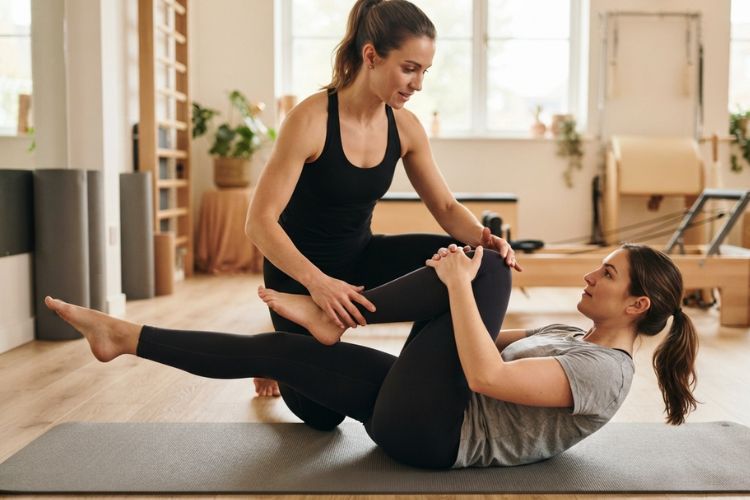
Having someone guide you through your first class can take away much of the uncertainty. Your instructor can demonstrate how to set up each movement, explain where to place your hands or feet, and remind you to adjust your posture when needed. They may also use simple cues to help you understand how your breathing and movement should work together.
Experienced mat Pilates instructors can also provide modifications when a movement feels too difficult. You may be given a smaller range of motion or a different position that works the same muscles while remaining appropriate for your current ability.
What Might You Feel During Your First Workout?
Your first class may feel more demanding than you expect, even though the movements are slow and controlled. You might notice your core, hips, thighs, shoulders, or back becoming warm or tired, and some exercises may cause a little muscle shaking as you hold the position.
That kind of effort is normal when your body is getting used to new movements. However, sharp or unusual pain is different. If something feels painful rather than simply challenging, stop the exercise and let your instructor know so they can check your form or offer an easier option.
The Last Part of Your First Class
The final part of the workout usually becomes slower and more relaxed. You may complete gentle stretches, mobility movements, or breathing exercises to help your body transition out of the active portion of the class.
You may also notice that your body feels different after the session. Some muscles may feel worked, while you may already feel more aware of your posture and movement. These changes are part of becoming familiar with Pilates.
Recovering After Your First Workout
Give your body some time to unwind after class and drink plenty of water. It is normal to notice mild soreness, especially if your muscles have been working in ways they are not used to. Rather than judging your progress by how tough the session felt, pay attention to how you feel over the following day or two.
As you attend more classes, the exercises and instructor cues will start to feel more familiar. Pilates Fitness is built through steady practice, so there is no need to push yourself to exhaustion every time. A consistent routine allows you to improve gradually while giving your body enough time to adapt.
Getting Comfortable With Your Next Class
Your second class may already feel more familiar because you will recognize some positions and instructions. Continue working at a level that allows you to maintain good form, and ask questions whenever you are unsure about a movement.
You can also practice simple exercises at home once you understand their proper technique. Building gradually gives your body time to adapt while helping you develop strength, coordination, and confidence.
Conclusion
Your first Mat Pilates workout is about learning, not getting everything perfect. As you become familiar with the movements, breathing, and instructor cues, each class can feel more natural. Start at a comfortable level, focus on proper form, and give your body time to build strength, control, coordination, and confidence through consistent practice. start oontpr with new idea
If you are ready to continue your Pilates journey in Columbus, Pilates Plus offers Mat Pilates, Reformer Pilates, and Yoga & Flow in a supportive, beginner-friendly studio environment. With guided instruction and a focus on proper movement, the studio helps you build strength, improve body awareness, and feel more confident as you progress.
FAQs
Do I need to be flexible to start Mat Pilates?
No. You can start wherever you are with your flexibility. The movements can gradually help you loosen up and improve your mobility, so there is no need to be flexible or comfortable with advanced stretches before your first class.
Is Mat Pilates difficult for beginners?
It can feel challenging at first, especially while you are getting used to controlled movements and breathing. However, beginner classes can be adjusted to your ability, so you can learn at a comfortable pace.
How long is a typical Mat Pilates class?
A Mat Pilates class commonly lasts around 45 to 60 minutes, although the exact length depends on the studio and class format.
Should I eat before a Pilates workout?
If you are hungry, a light meal or snack may be more comfortable than exercising on an empty stomach. Allow enough time to digest before class.
Do I need Pilates socks or can I go barefoot?
This depends on the studio. Some classes allow barefoot practice, while others recommend grip socks for comfort and stability.