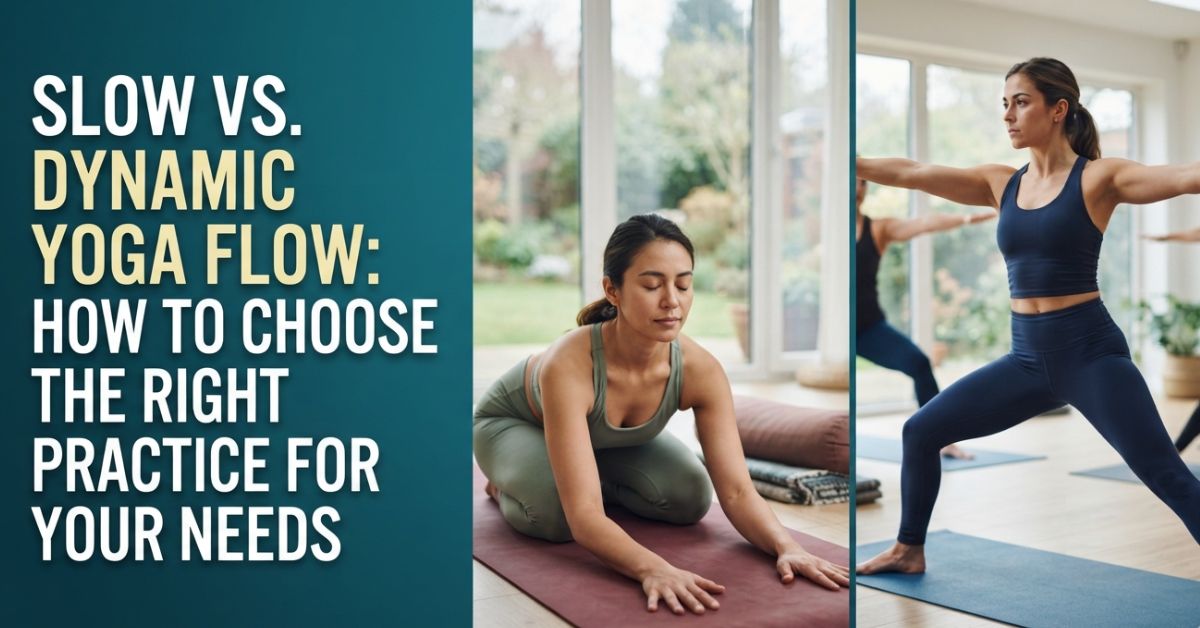
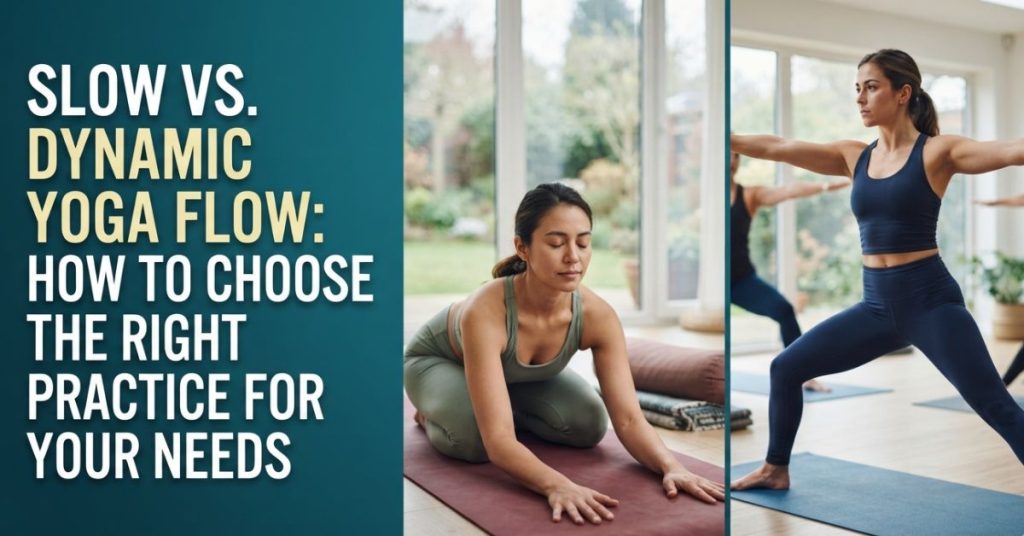
Some days, yoga feels better when you have time to settle into each pose. On other days, you may want to keep moving and let one position lead naturally into the next.
Both approaches belong in a Yoga Flow, but they create very different experiences. Choosing between them depends on your energy, experience, and what you want from your practice that day.
Slow vs Dynamic Yoga: What Is the Difference?
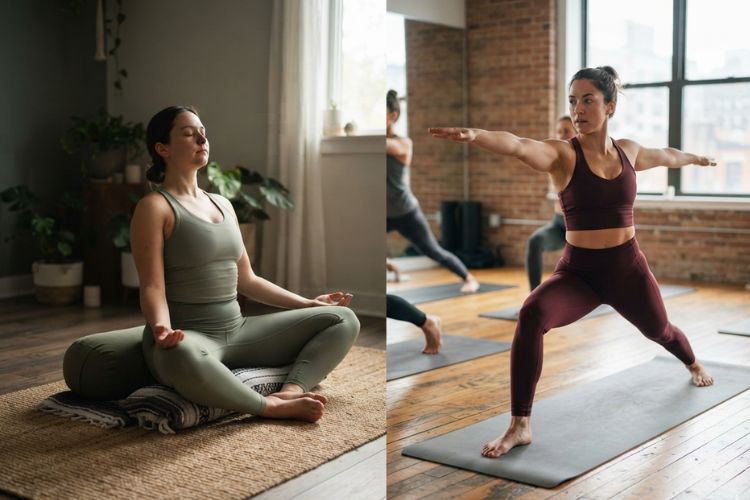
The main difference is pace, but Slow vs. Dynamic Yoga is about more than how quickly you move. Changing the speed also changes how long you stay in poses, how you use your breath, and where you feel the challenge.
A slower class leaves more time to adjust your position and notice how your body responds. Dynamic sessions connect poses more continuously, so balance and coordination become important during the transitions too. Neither style is automatically harder. They simply challenge the body in different ways.
What Does a Slow Yoga Flow Feel Like?
A Slow Yoga Flow gives you time to stay with a movement rather than immediately preparing for the next one. You may hold a lunge, Warrior II, or Chair Pose for several breaths before moving on.
That extra time gives you a chance to notice your footing, posture, and breathing. Small adjustments become easier when you are not rushing to keep up with a sequence.
Slow does not necessarily mean easy. Holding a pose for longer can ask the muscles to keep working even when the movement itself looks simple.
What Changes in a Dynamic Yoga Flow?
A Dynamic Yoga Flow keeps the practice moving. Instead of spending several breaths in every posture, you may move through a sequence where one pose leads directly into another.
This creates a different challenge. You need enough control to enter and leave each position while keeping your breathing and balance steady.
The pace can also make the session feel more active. Still, dynamic yoga does not have to mean racing through poses or attempting advanced movements.
Which Style Matches What You Need Today?
You do not have to decide that you are permanently a “slow yoga person” or a “dynamic yoga person.” A better question is what type of movement feels useful today.
If you want time to work on form, a slower Yoga Flow may make more sense. Staying in a position gives you an opportunity to notice where your feet, hips, shoulders, and spine are placed.
If you have more energy and enjoy continuous movement, a faster flow may feel more natural. The transitions themselves become part of the practice rather than simply a way to reach the next pose.
The Same Pose Can Feel Completely Different
Take Warrior II as an example. In a slower session, you might stay there for several breaths and gradually notice the work in your legs, the position of your arms, and whether your shoulders have started to tense.
Put Warrior II into a flowing sequence and the experience changes. You enter the pose, find your balance, and then prepare to move again without completely losing your alignment.
The pose is the same, but the pace changes what you pay attention to. This is one reason a Yoga Flow Practice can feel different even when many of the poses are familiar.
What If You Are New to Yoga?
Beginners often assume that the slowest class will automatically be the easiest. That is not always the case because class level matters just as much as speed.
A class designed around Yoga for Beginners may include clear explanations and simple sequences while still allowing periods of continuous movement. An advanced slow class, meanwhile, may involve challenging positions held for longer periods.
Read the class description before deciding. Knowing whether a session is beginner-friendly can tell you more than the word “slow” or “dynamic” alone.
When a Slower Practice May Suit You
There are days when having more time between transitions simply feels better. You may want to concentrate on your breathing, work carefully with a new pose, or move without feeling hurried.
A slower pace may be worth choosing when:
- You are learning unfamiliar poses.
- You want more time to check your alignment.
- You prefer longer holds.
- You want to concentrate closely on breathing.
- Your body feels better with a steadier pace.
A slower session can still challenge strength and balance. The difference is that the work often comes from staying controlled within a position rather than moving quickly between several positions.
When a Dynamic Practice May Feel Better
Once common poses become familiar, moving between them may start to feel more natural. You are spending less time wondering where your feet should go and more time experiencing the sequence as a whole.
A dynamic practice may suit you when you enjoy continuous movement or want to work on coordination. It can also appeal to people who prefer shorter holds and a more active rhythm.
The goal is not to move as quickly as possible. Good control still matters, especially when the pace picks up.
You Can Practice Both During the Week
There is no rule that your entire routine has to follow one pace. Mixing the two can make your Yoga Flow Practice more flexible and easier to adapt around other activities.
You might prefer a more active session when you have plenty of energy, then choose a slower class later in the week. Running, strength training, cycling, work demands, and general fatigue can all affect what feels appropriate.
Your preference can change over time as well. The type of class you enjoy as a beginner may not be the one you naturally choose after gaining more experience.
Four Questions to Ask Before Choosing a Class
Instead of overthinking the difference, ask yourself a few practical questions before your next session.
How Much Energy Do I Have?
A more energetic day may suit continuous movement. When you would rather take your time, a slower class may feel more comfortable.
Do I Want to Hold Poses or Keep Moving?
If you enjoy staying in a posture and exploring it, choose a slower pace. If you prefer moving regularly between positions, a dynamic class may suit you better.
How Familiar Are the Poses?
Familiar movements are often easier to follow at a quicker pace. When many positions are new, extra time can help you understand them without feeling rushed.
What Else Am I Doing This Week?
Yoga does not happen separately from everything else. Consider your workouts, daily activity, and recovery when deciding how active you want your next Yoga Flow to be.
Finding a Yoga Class That Fits
Class names can vary between studios, so do not rely on the title alone. Read the description to see whether the class mentions longer holds, continuous sequences, beginner instruction, or a faster pace.
If you are exploring yoga and flow columbus classes, look for a session that matches both your experience and the way you want to move. Asking the instructor or studio about the class pace can also help when the description is unclear.
You can always try different styles before deciding what you enjoy. Experience is often more useful than trying to choose based only on a class name.
Slow or Dynamic? Let Your Needs Decide
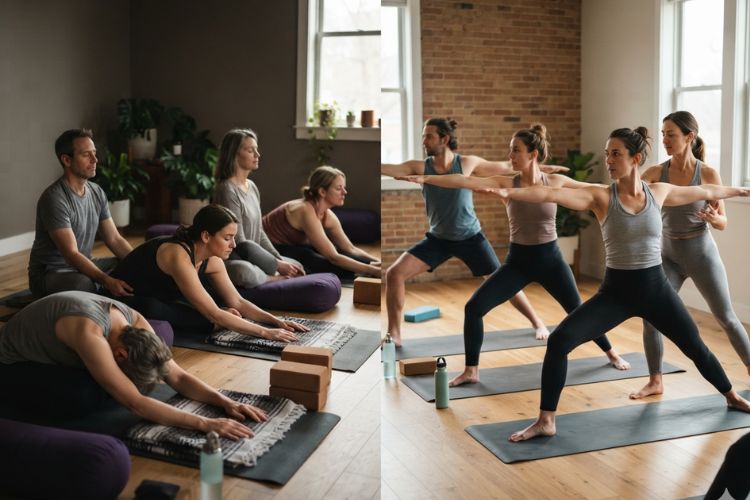
The Slow vs Dynamic Yoga decision does not need one permanent answer. A slower practice gives you more time within individual positions, while a dynamic session creates a more continuous rhythm from one movement to another.
Both can have a place in your routine. What works best may depend on your energy, experience, other activities, and what your body feels ready for that day.
At Pilates Plus Columbus, exploring different approaches can help you find a Yoga Flow that fits naturally into your movement routine rather than forcing yourself to follow one pace every time.
FAQs
Is slow yoga easier than dynamic yoga?
Not always. Longer holds can make a slower practice physically challenging, while dynamic yoga creates more demand through continuous movement and transitions.
Is dynamic yoga suitable for beginners?
Yes, if the class is designed for beginners. Check the class level and expected experience rather than judging difficulty only by pace.
Can slow yoga help build strength?
Yes. Staying in certain positions for several breaths requires muscles to remain active, particularly in poses that challenge the legs, core, or upper body.
Can I practice slow and dynamic yoga in the same week?
Yes. Many people switch between styles depending on their energy, other workouts, and personal preference.
How do I choose the right yoga flow?
Consider how much energy you have, your experience with the poses, and whether you want longer holds or continuous movement. The right choice can change from one session to another.